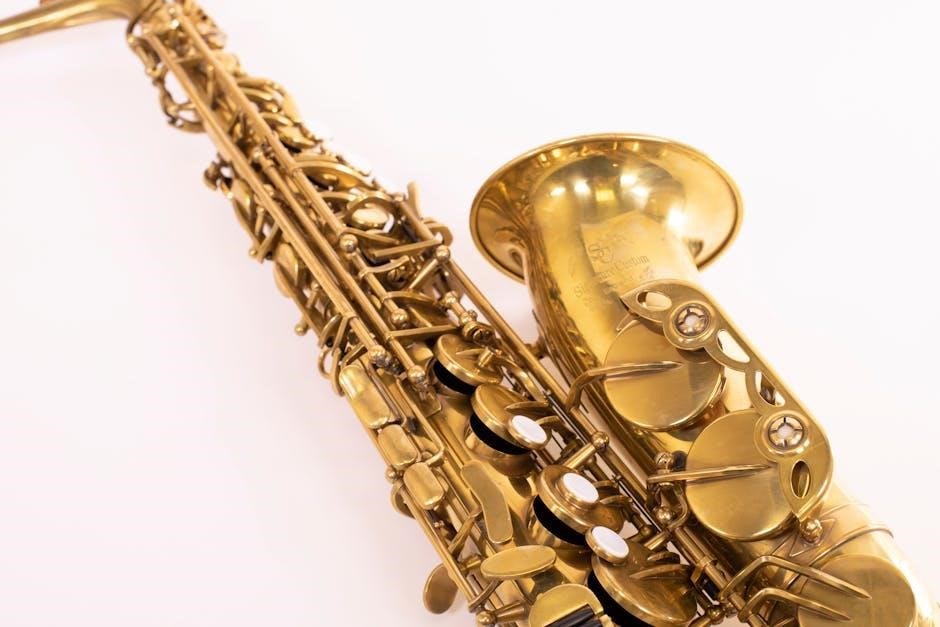
Understanding the Alto Sax Altissimo Range
Exploring the upper reaches of the alto saxophone—the altissimo range—requires dedicated practice and resources like comprehensive finger charts, often available as PDF downloads.
What is Altissimo?
Altissimo on the alto saxophone refers to the notes extending beyond the standard high F# – those exceptionally high notes that demand advanced technique and control. It’s a register that significantly expands the instrument’s melodic possibilities, offering expressive opportunities for seasoned players. Mastering altissimo isn’t about simply knowing finger charts, though resources like a readily available PDF are crucial; it’s about developing a refined embouchure, robust air support, and precise fingering coordination.
These higher notes aren’t naturally produced with standard fingerings. Instead, they rely on alternate fingerings, often involving complex combinations and subtle adjustments. A detailed alto sax altissimo finger chart PDF will visually map these combinations, but understanding the why behind them – the acoustic principles at play – is equally important. Successfully navigating the altissimo range unlocks a new dimension of musical expression, allowing for soaring melodies and dramatic flourishes.
The Importance of an Altissimo Finger Chart
An altissimo finger chart is absolutely essential for any alto saxophonist venturing beyond the standard range. These charts, frequently found as convenient PDF downloads, visually represent the complex finger combinations required to produce these exceptionally high notes. They serve as a roadmap, guiding players through the often-intimidating landscape of alternate fingerings.

However, a chart isn’t merely a substitute for practice; it’s a tool to facilitate it. A good PDF chart will clearly display fingerings for notes like altissimo D, C#, and C, often including variations. Utilizing such a resource allows for focused practice, eliminating guesswork and promoting muscle memory. Remember, mastering altissimo involves more than memorization; it requires developing the embouchure and air support to execute those fingerings effectively. A chart is the starting point, not the finish line.

Basic Alto Saxophone Fingerings

Solidifying standard fingerings is crucial before tackling altissimo; PDF charts displaying the full range, from low Bb to altissimo D, are beneficial.
Core Fingerings for Standard Range
Before venturing into the complexities of altissimo, a firm grasp of core alto saxophone fingerings is absolutely essential. These foundational fingerings, covering the instrument’s standard range, provide the building blocks for extending your technique upwards. Many comprehensive fingering charts, readily available as PDF downloads, begin with these basics, illustrating finger positions for notes from low Bb up through the standard alto saxophone register.
Mastering these core fingerings ensures clean articulation, accurate intonation, and efficient movement across the instrument. Familiarity with these positions allows you to focus on the subtle embouchure and air support adjustments needed for the altissimo register, rather than struggling with basic finger coordination. Resources like Etsy’s digital download charts often dedicate a significant portion to these fundamental fingerings, recognizing their importance. A strong foundation is paramount for successful altissimo exploration, and a well-organized PDF chart can be an invaluable tool.
Transitioning to the Altissimo Register
Moving into the altissimo register demands a shift in approach, building upon established core fingerings. A detailed PDF alto saxophone finger chart becomes crucial, showcasing the unique combinations required to produce these higher notes. These charts, like those offered by Mark Peotter via Sheet Music Direct, illustrate how to modify existing fingerings and introduce new ones.
The transition isn’t solely about finger placement; it involves subtle embouchure adjustments and increased air support. Charts often don’t explicitly detail these, but understanding them alongside the fingering is key. Resources from The Woodwind Fingering Guide highlight that altissimo often utilizes alternate fingerings for smoother passages and tonal variations. Utilizing a comprehensive PDF chart alongside focused practice will help bridge the gap between the standard range and the challenging altissimo register, unlocking the saxophone’s full potential.

Alto Sax Altissimo Finger Chart – Key Notes
Essential altissimo notes—D, C#, and C—require specific fingerings, readily available in PDF charts from sources like Etsy and Zem Audu’s resources.
Altissimo D Fingering
Achieving Altissimo D on the alto saxophone presents a significant challenge, demanding precise finger placement and embouchure control. Numerous resources, often available as downloadable PDF finger charts, detail the necessary combination of keys. Typically, this involves a complex arrangement including the octave key, side keys, and potentially, adjustments to the thumb rest.
Charts from sources like Etsy and Mark Peotter’s educational materials visually demonstrate this fingering, aiding in quicker comprehension. Mastering this note isn’t merely about replicating the finger pattern; it’s about understanding the airflow and subtle embouchure adjustments required to produce a clear, resonant tone. The Woodwind Fingering Guide also provides valuable insights, often including alternate fingerings for Altissimo D, offering flexibility for different musical passages. Consistent practice with a reliable PDF chart is crucial for success.
Altissimo C# Fingering
Successfully executing Altissimo C# on the alto saxophone requires a nuanced understanding of fingering and embouchure. Detailed PDF finger charts, readily available from resources like Etsy and The Woodwind Fingering Guide, illustrate the specific key combinations. This fingering generally involves the octave key, several side keys, and a precise adjustment of the right-hand pinky finger.
Mark Peotter’s charts are particularly helpful, offering clear visual representations. However, simply knowing the finger pattern isn’t enough; players must develop the necessary air support and embouchure control to produce a focused tone. Alternate fingerings, often included in comprehensive PDF guides, can provide solutions for faster passages or tonal variations. Consistent practice, guided by a reliable chart, is essential for mastering this challenging note and expanding your alto saxophone range;
Altissimo C Fingering
Achieving a clear Altissimo C on the alto saxophone demands precision, and a detailed PDF fingering chart is an invaluable tool. Resources like those found on Etsy and The Woodwind Fingering Guide provide visual guides to the complex key combinations. Typically, this fingering involves the octave key, a combination of side keys, and a delicate manipulation of the right-hand pinky.
Many charts, including those by Mark Peotter, also present alternate fingerings. These alternatives can be crucial for navigating fast passages or achieving specific tonal colors. Remember, a PDF chart is just a starting point; developing proper embouchure and consistent air support are paramount. Consistent practice, referencing a reliable chart, will unlock this challenging note and broaden your saxophone’s upper register, enhancing your overall musical expression.

Alternate Fingerings for Altissimo
PDF alto sax finger charts reveal alternate fingerings for altissimo notes, offering solutions for speed, tone, and dynamic control during performance.
Why Use Alternate Fingerings?
Exploring alternate fingerings within an alto sax altissimo finger chart PDF unlocks significant advantages for the dedicated saxophonist. Standard fingerings, while reliable, aren’t always optimal for every musical situation. Alternate fingerings provide solutions for navigating fast passages more fluidly, as some configurations allow for quicker transitions between notes, minimizing awkward hand movements.
Furthermore, they offer nuanced control over tone color and dynamic range. A PDF chart will demonstrate how different fingerings can subtly alter the instrument’s timbre, allowing for expressive variations. Some alternatives modify pitch at different dynamic levels, offering a wider palette of sonic possibilities. Mastering these options expands your technical and artistic capabilities, enabling you to execute complex musical ideas with greater precision and artistry. Ultimately, alternate fingerings aren’t about replacing standard ones, but rather augmenting your skillset.
Fast Passages and Alternate Fingerings
When tackling rapid sequences in the altissimo register, referencing an alto sax altissimo finger chart PDF becomes invaluable. Standard fingerings can present challenges due to their complexity and required hand movements. Alternate fingerings, meticulously detailed in these charts, often provide smoother, more efficient pathways for navigating fast passages.
These alternatives frequently minimize large jumps between finger positions, reducing physical strain and increasing speed. A well-designed PDF will highlight fingerings specifically suited for quick transitions, enabling a more legato and articulate performance. Practicing these alternatives builds muscle memory, allowing for instinctive execution during performance. Remember, the goal isn’t simply speed, but maintaining clarity and control while executing technically demanding phrases. Utilizing these charts unlocks a new level of agility in your playing.
Tone Color and Dynamic Control with Alternate Fingerings
Beyond speed, an alto sax altissimo finger chart PDF reveals how alternate fingerings dramatically influence tone color and dynamic control in the upper register. Subtle shifts in fingering can produce a brighter, more focused sound, or conversely, a darker, more mellow timbre. These nuances are crucial for expressive playing.
The PDF charts often indicate fingerings that facilitate greater dynamic range, allowing for softer, more controlled pianissimo passages, or powerful, resonant fortissimo bursts. Experimenting with these alternatives enables a wider palette of sonic possibilities. Mastering these techniques requires careful listening and a conscious awareness of how each fingering affects the overall sound. It’s about shaping the tone, not just hitting the right notes, and a good chart is your guide.

Resources for Alto Sax Altissimo
Numerous online resources, including downloadable alto sax altissimo finger chart PDFs, and guides like The Woodwind Fingering Guide, aid in mastering these challenging notes.
Printable Alto Saxophone Finger Charts (Low Bb to Altissimo D)
Finding a comprehensive, printable alto saxophone finger chart, extending from the lowest Bb to the challenging altissimo D, is crucial for dedicated practice. Several online platforms offer these resources, often in convenient PDF format for easy access and printing. Etsy, for example, provides digital download options featuring charts spanning the full range, ideal for beginners through advanced players.
These charts aren’t merely note-for-note guides; they visually represent the complex finger combinations needed to produce each sound. A well-designed chart will clearly illustrate the fingerings, making it easier to memorize and internalize them. The benefit of a printable PDF is the ability to annotate the chart with personal notes, preferred alternate fingerings, or reminders about embouchure adjustments. Having a physical copy readily available during practice sessions can significantly accelerate learning and improve accuracy in the altissimo register.
Online Finger Chart Guides (Woodwind Fingering Guide)
The Woodwind Fingering Guide stands out as an exceptional online resource for alto saxophone players seeking to master the altissimo range. It doesn’t just present standard fingerings; it delves into the world of alternate fingerings, crucial for navigating complex passages and achieving nuanced tonal control. These charts, often accessible as downloadable resources or easily referenced online, are invaluable for expanding your technical capabilities.
The guide thoughtfully categorizes alternate fingerings, explaining which are best suited for fast passages, and which modify tone color or pitch at varying dynamic levels. This nuanced approach goes beyond a simple PDF chart, offering contextual understanding. Whether you’re tackling lower or upper altissimo, the Woodwind Fingering Guide provides a wealth of options, empowering you to explore the full expressive potential of the alto saxophone. It’s a dynamic resource, constantly updated with new insights and fingerings.
Educational Sheet Music (Mark Peotter Charts)
Mark Peotter offers highly regarded alto saxophone altissimo finger charts, frequently available as sheet music or downloadable PDF resources. These aren’t merely lists of fingerings; they are designed as educational tools, intended to guide players through the complexities of the altissimo register with clarity and precision. Peotter’s charts are known for their readability and logical organization, making them accessible to students of all levels.
His approach emphasizes understanding how fingerings work, not just memorizing them. This facilitates quicker learning and greater adaptability. These charts often include suggested exercises and musical examples to help players integrate the altissimo range into their playing. They are a valuable supplement to traditional lessons and a fantastic resource for self-study, providing a structured path to mastering those challenging high notes and expanding your saxophone vocabulary.

Tips for Mastering Altissimo
Consistent practice, utilizing a reliable PDF alto sax altissimo finger chart, combined with focused embouchure work, unlocks the saxophone’s highest potential.
Embouchure Adjustments

Successfully navigating the altissimo register on the alto saxophone demands precise embouchure control, often requiring subtle but crucial adjustments. A detailed PDF alto sax altissimo finger chart is a valuable tool, but it’s only part of the equation. Players frequently find they need to tighten the embouchure slightly, increasing lip pressure against the mouthpiece, to support the higher frequencies.
However, this tightening must be balanced; excessive pressure can choke the sound and hinder resonance. Simultaneously, a more focused and directed airstream is essential. Think of ‘saying’ a higher vowel sound – ‘eee’ or ‘ooo’ – to naturally adjust the oral cavity and focus the air. Many experienced players also subtly adjust the jaw position, bringing it slightly forward. Experimentation, guided by a good finger chart PDF, is key to discovering what works best for your individual anatomy and setup. Remember, consistency in these adjustments is vital for reliable altissimo performance.
Air Support and Control
Mastering the altissimo range isn’t solely about fingerings – even with a comprehensive PDF alto sax altissimo finger chart – it fundamentally relies on robust and controlled air support. The higher registers demand significantly more air pressure and a consistent, unwavering airstream. Players must engage the diaphragm fully, breathing deeply from the lower abdomen, rather than relying on shallow chest breathing.
Visualize directing a focused column of air through the instrument, maintaining consistent pressure even as you navigate complex fingerings. A common mistake is to ‘blow harder,’ which often leads to a strained sound. Instead, focus on support – maintaining a steady airflow while subtly adjusting embouchure and voicing. Utilizing long tones and overblowing exercises, alongside referencing your finger chart PDF, will build the necessary endurance and control. Consistent practice is paramount for developing the air support needed for effortless altissimo playing.