
Bowling ball weight significantly impacts performance, blending grip and power for optimal results; a crucial element often overlooked by newcomers to the sport.
What is the Importance of Ball Weight?
Bowling ball weight is paramount for achieving consistent and powerful throws, directly influencing a bowler’s ability to transfer energy to the pins. A properly weighted ball allows for greater pin action, increasing strike potential and overall scoring average. Lighter balls, suitable for beginners, prioritize control, while heavier balls – typically 10 to 16 pounds – offer increased hitting power for experienced bowlers.
The weight impacts the ball’s trajectory and hook potential; heavier balls maintain momentum better, creating a stronger arc towards the pocket. Selecting the right weight isn’t merely about strength, but about finding a balance between power, control, and comfort, ensuring a repeatable and effective bowling motion. Ignoring this crucial aspect can lead to inconsistent results and potential injury.
Understanding Ball Weight and Performance
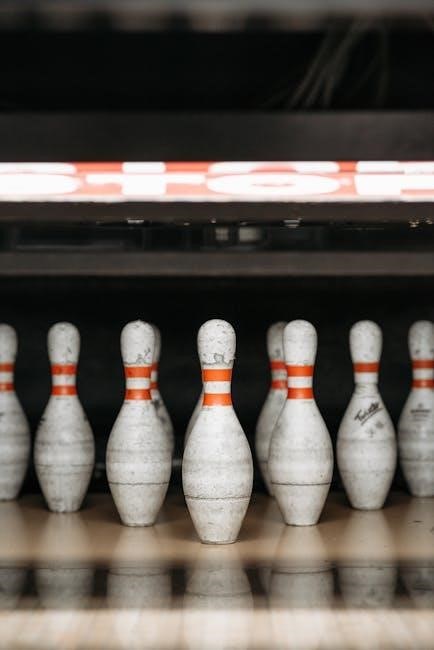
Ball weight directly correlates to a bowler’s ability to generate revolutions and achieve a desired hook. Heavier balls require more physical strength but offer greater pin carry due to increased momentum. Conversely, lighter balls are easier to control, making them ideal for beginners focusing on accuracy. The pins themselves weigh 3.5lbs each, highlighting the importance of a substantial ball weight for effective impact.
Reactive resin balls, commonly used by experienced bowlers, benefit from heavier weights to maximize their hooking potential. House balls, typically made of plastic, are often lighter and designed for general use. Understanding this interplay between weight, ball material, and bowling style is crucial for optimizing performance and consistently hitting the pocket.

Bowling Ball Weight Ranges
Bowling balls span from 6 to 16 pounds, offering options for all ages and skill levels; selecting the right weight is fundamental to success.
6-10 lbs Bowling Balls: For Beginners and Youth
Bowling balls in the 6-10 pound range are ideally suited for young bowlers, teenagers, and smaller-framed adults just starting their bowling journey. These lighter weights prioritize control and allow bowlers to develop proper form without straining themselves. It’s about learning the fundamentals – the swing, the approach, and the release – before adding power.
For children and those new to the sport, a lighter ball reduces the risk of injury and builds confidence. It allows them to consistently hit the pocket and experience the satisfaction of knocking down pins. Remember, the goal isn’t immediate power, but establishing a solid foundation for future improvement. These weights are excellent for building muscle memory and technique.
11-12 lbs Bowling Balls: Entry-Level Adult Weights
Bowling balls weighing between 11 and 12 pounds represent a solid starting point for most adult beginners, particularly those not accustomed to lifting heavier objects regularly. This weight range strikes a balance between controllability and a noticeable impact on the pins. It’s a comfortable transition for individuals building strength and refining their technique.
These weights allow bowlers to experience a more substantial reaction from the lane without sacrificing too much control. They’re perfect for those who are past the initial learning phase and are beginning to focus on consistency and accuracy. It’s a good weight to start with if you’re unsure where to begin, allowing for gradual increases as strength improves.
13-14 lbs Bowling Balls: Intermediate Adult Weights
Bowling balls in the 13-14 pound range are ideal for adults who have some bowling experience and are looking for a “nice middle ground” in weight. This is where bowlers begin to feel a more significant impact on the pins, allowing for greater pin action and potential for higher scores. It requires a moderate level of physical conditioning and control.
These weights offer a good balance between power and accuracy, enabling bowlers to develop a consistent hook and improve their overall game. It’s a suitable choice for those who have built some strength and are comfortable with the fundamentals of bowling, seeking to elevate their performance without overwhelming themselves.
15-16 lbs Bowling Balls: Advanced and Experienced Bowlers
Bowling balls weighing 15-16 pounds are generally reserved for advanced and experienced bowlers possessing significant physical strength and refined technique. These heavier weights maximize pin impact, delivering substantial power behind the ball and increasing the bowler’s potential for strikes. However, control is paramount; improper form can lead to injury or inconsistent results.
Experienced bowlers utilize these weights to optimize their hook potential, driving through the pins with greater force. It’s crucial to comfortably handle the weight without compromising form or accuracy. This range demands consistent practice and a solid understanding of bowling fundamentals to fully leverage the benefits.
The “10% Rule” for Ball Weight Selection
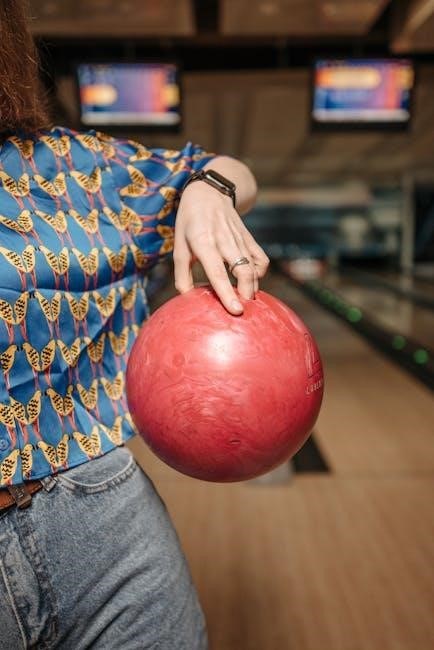
The 10% rule suggests selecting a bowling ball weighing 10% of your body weight, up to a maximum of 16 pounds, as a starting point.
How to Calculate Your Ideal Ball Weight
Determining your ideal bowling ball weight begins with a simple calculation: multiply your body weight by 0.10. This provides a baseline weight in pounds. For example, a 150-pound individual would initially consider a 15-pound ball. However, remember this is merely a guideline, not a rigid rule.
Several factors can necessitate adjustments. Beginners, or those with limited upper body strength, might benefit from starting lighter, perhaps 10% minus a pound or two, prioritizing control over power. Experienced bowlers aiming for increased pin action may lean towards the higher end of the range, but always within the USBC’s maximum limit.
It’s crucial to comfortably handle the weight throughout your approach and release; strain indicates the ball is too heavy. Don’t hesitate to experiment with different weights during practice sessions to discover what feels most natural and effective for your individual bowling style.
Limitations and Considerations of the 10% Rule
While the “10% rule” offers a convenient starting point, it’s essential to recognize its limitations. It doesn’t account for individual physical conditioning, bowling style, or the type of bowling ball used. A reactive resin ball, designed for hooking, may feel heavier than a house ball due to its surface friction.
Beginners often overestimate their strength, leading to choosing a ball that’s too heavy, hindering control and potentially causing injury. Conversely, lighter bowlers might find a 10% ball too light, lacking the momentum needed for sufficient pin carry.
Personal comfort is paramount. The rule should be adjusted based on your ability to maintain a smooth, controlled swing without straining. Prioritize proper form and technique over blindly adhering to a percentage; experimentation is key to finding your optimal weight.

USBC Bowling Ball Weight Specifications
USBC establishes clear weight limits for sanctioned play, ensuring fairness and safety; these regulations define the permissible range for competitive bowling balls.
Maximum Bowling Ball Weight Limits
The United States Bowling Congress (USBC) sets a firm upper boundary on bowling ball weight to maintain safety and prevent undue physical strain on bowlers. Currently, the maximum allowable weight for a bowling ball in USBC-sanctioned competition is 16 pounds. This limit applies universally to all bowlers, regardless of age or skill level.
Exceeding this weight is prohibited, as heavier balls can increase the risk of injury, particularly to the wrist, elbow, and shoulder. The 16-pound limit ensures a level playing field and promotes responsible bowling practices. While some individuals may possess the strength to handle heavier balls, the USBC prioritizes the well-being of all participants, enforcing this crucial weight restriction.
Minimum Bowling Ball Weight Limits
The USBC also establishes a minimum weight for bowling balls used in sanctioned events, ensuring a baseline level of pin action and preventing the use of excessively light balls. The minimum allowable weight is 6 pounds. This regulation primarily affects young bowlers and those with physical limitations who may require a lighter ball for control and safety.
Using a ball lighter than 6 pounds is not permitted in official competitions. While lighter balls might seem easier to handle, they often lack the necessary momentum to effectively transfer energy to the pins, hindering scoring potential. The minimum weight rule aims to balance accessibility with maintaining the integrity and challenge of the sport for all bowlers.
Factors Influencing Bowling Ball Weight Choice
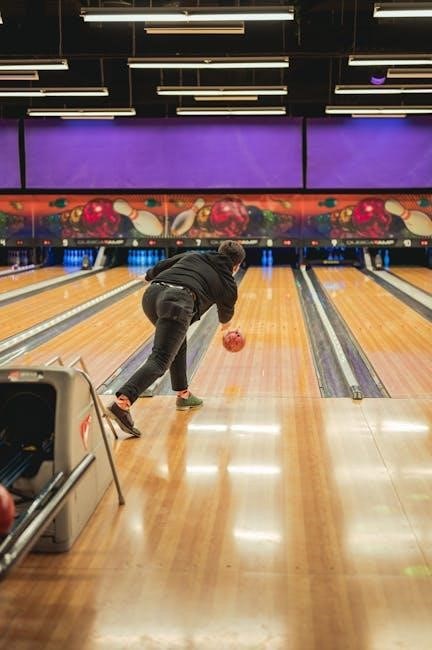
Selecting a bowling ball depends on strength, style (hook, straight, spare), and ball type—house balls differ from reactive resin, impacting weight preference.
Physical Strength and Conditioning
A bowler’s physical capabilities are paramount when choosing a ball weight. Opting for a ball too heavy can lead to fatigue, compromised form, and potential injury, hindering consistent performance. Conversely, a ball that’s too light may lack the necessary power to effectively transfer energy to the pins, resulting in reduced pin action and lower scores.
Consider your overall strength and endurance. If you’re new to bowling or have limited upper body strength, starting with a lighter weight is advisable. As your strength and conditioning improve, you can gradually increase the weight. Proper technique is also crucial; a well-executed swing with a lighter ball can be more effective than a forced swing with a heavier one. Remember, comfort and control should always be prioritized over sheer weight.
Bowling Style (Hook, Straight, Spare)
Your bowling style profoundly influences the ideal ball weight. Hook bowlers, aiming for a significant curve, often benefit from heavier balls (14-16 lbs) to generate the necessary rotational energy and pin carry. The added weight helps maintain momentum through the hook. Straight bowlers, prioritizing accuracy and power, may find a mid-weight ball (12-14 lbs) suitable for consistent delivery.
For spare shooting, a lighter ball (10-12 lbs) can offer increased control and precision, particularly for converting tricky single-pin spares. The lighter weight allows for a more controlled swing and reduces the risk of overshooting. Experimentation is key; finding the weight that complements your style and allows for consistent, repeatable shots is crucial for improvement.
House Ball vs. Reactive Resin Ball
House balls, typically made of plastic or polyester, are generally lighter and more forgiving, ideal for beginners. Due to their composition, they require more speed to generate hook potential, meaning a slightly heavier weight might be preferable to compensate. Conversely, reactive resin balls, favored by experienced bowlers, grip the lane more aggressively.
This enhanced grip allows for greater hook potential with less speed, potentially enabling you to comfortably use a slightly lighter weight. Reactive resin balls respond better to subtle hand movements. Consider your skill level and ball type when selecting weight; a heavier house ball isn’t always better than a moderately weighted reactive resin ball.

Bowling Ball Size and Weight Correlation
Ball diameter and hand size are intertwined with weight; proper drilling maximizes grip and control, ensuring the ball complements both your physique and bowling style.
Ball Diameter and Hand Size
The correlation between ball diameter and hand size is fundamental for a comfortable and effective bowling experience. Bowling balls are available in various diameters, typically ranging up to 2.7 inches, and selecting the right size is crucial for proper grip and control. A ball that’s too large will be difficult to handle, while one that’s too small won’t provide sufficient leverage.
Your hand size, measured from the base of your palm to the tip of your middle finger, dictates the appropriate ball diameter. Professional drillers utilize this measurement to create finger holes that perfectly accommodate your hand, ensuring a secure yet relaxed grip. This personalized fit enhances your ability to generate power and maintain accuracy throughout your swing and release. Ignoring this aspect can lead to discomfort, inconsistent throws, and even injury.
The Relationship Between Weight and Drilling
The weight of a bowling ball directly influences the drilling process and ultimate performance. Heavier balls generally require larger grip holes to accommodate the increased force exerted during the swing, while lighter balls can utilize smaller holes for enhanced control. A skilled pro shop operator considers both weight and hand size when determining the optimal hole layout.
Drilling isn’t simply about creating holes; it’s about balancing the ball and tailoring it to your individual bowling style. The weight distribution is altered by the drilling pattern, impacting the ball’s reaction on the lane. A properly drilled ball, considering its weight, will hook predictably and consistently, maximizing your scoring potential. Incorrect drilling can negate the benefits of even the most perfectly weighted ball.

Candlepin Bowling Ball Weight Limits

Candlepin balls have specific regulations, typically capped at 2.7 inches in diameter, differing significantly from ten-pin bowling’s weight specifications and ball sizes.
Specific Weight Regulations for Candlepin Bowling
Candlepin bowling operates under unique rules regarding ball specifications, diverging substantially from the ten-pin game. While ten-pin balls range from 6 to 16 pounds, candlepin balls are considerably lighter and measured by diameter rather than weight. Typically, candlepin bowling alleys offer balls around 2.6 to 2.7 inches in diameter.
This translates to a weight significantly less than standard bowling balls, generally falling below the 6-pound mark. The smaller size and lighter weight are crucial due to the game’s distinct pin setup and the need to knock down pins with a glancing blow rather than a direct hit. These regulations ensure fair play and maintain the unique challenges inherent in candlepin bowling, fostering a different skill set compared to its ten-pin counterpart.
Differences Between Ten-Pin and Candlepin Balls
Ten-pin bowling balls prioritize weight, ranging from 6 to 16 pounds, influencing power and hook potential. Conversely, candlepin balls emphasize size, typically 2.6 to 2;7 inches in diameter, resulting in a lighter weight – generally under 6 pounds. This difference stems from the games’ distinct objectives.
Ten-pin aims for direct pin impact, benefiting from heavier balls. Candlepin, however, requires a glancing blow to scatter pins, necessitating smaller, lighter balls for control. Furthermore, ten-pin balls feature finger holes for a secure grip, while candlepin balls lack these, relying on hand position for stability. These fundamental differences reflect the unique skills and strategies each game demands.

Choosing the Right Weight for Different Skill Levels
Skill level dictates ideal weight: beginners prioritize control with lighter balls, while advanced bowlers leverage heavier weights for increased hook potential and pin action.
Beginner Bowlers: Prioritizing Control
For novice bowlers, selecting the appropriate weight is paramount, and control should be the primary focus over sheer power. Lighter bowling balls, typically in the 6 to 10 lbs range, are highly recommended. These lighter weights allow beginners to develop proper form and technique without struggling against excessive weight.
A lighter ball facilitates a smoother swing and more consistent release, leading to improved accuracy. It’s far more beneficial to learn to hit your target consistently with a lighter ball than to muscle a heavier ball down the lane with poor form. Remember, the pins weigh 3.5 lbs each, so a lighter ball can still effectively knock them down with precise placement. Prioritizing control builds a solid foundation for future improvement and prevents early frustration.
Intermediate Bowlers: Balancing Power and Accuracy
As bowlers progress, a shift towards balancing power and accuracy becomes essential. Intermediate bowlers, having established a basic foundation, can begin experimenting with slightly heavier balls – typically in the 13 to 14 lbs range. This allows for increased pin action and a more substantial hit, but shouldn’t compromise form.
The goal is to find a weight that provides enough momentum to create a noticeable difference in pin carry, while still allowing for a controlled and repeatable swing. Remember the “10% rule” as a guideline, but prioritize comfort and consistency. A slight increase in weight can enhance hook potential, but only if proper technique is maintained. Avoid jumping to a significantly heavier ball too quickly.
Advanced Bowlers: Optimizing for Hook Potential
For experienced bowlers, maximizing hook potential is paramount. Weights in the 15-16 lbs range are common, allowing for greater rotational force and a more aggressive reaction on the lane. However, this demands significant physical strength and impeccable technique; heavier balls require a more refined swing and release.
Advanced bowlers often fine-tune their weight selection based on lane conditions and personal preference. They understand that a heavier ball isn’t always better, and prioritize a weight that complements their unique style. The 10% rule serves as a starting point, but individual comfort and the ability to consistently deliver a powerful, controlled hook are key.
Common Mistakes When Selecting Ball Weight
Frequently, bowlers choose balls too heavy, sacrificing control, or too light, diminishing pin impact; proper weight selection balances power and accuracy for optimal results.
Choosing a Ball That is Too Heavy
Selecting a bowling ball that exceeds your comfortable handling capacity introduces several detrimental effects on your game. A heavier ball often leads to a compromised swing, forcing you to muscle the ball down the lane instead of utilizing a smooth, pendulum-like motion. This muscular effort reduces accuracy and consistency, making it difficult to repeat successful shots.
Furthermore, an overly heavy ball can cause physical strain, particularly in your wrist, elbow, and shoulder, potentially leading to injury over time. It also hinders your ability to generate the desired ball rotation (hook), as you’re focused on simply delivering the weight rather than imparting spin. Remember, pins weigh 3.5lbs each, so a lighter ball with controlled spin can be more effective than brute force.
Choosing a Ball That is Too Light
Opting for a bowling ball that’s too light presents its own set of challenges, primarily a lack of hitting power. While easier to control initially, a lighter ball struggles to transfer sufficient energy to the pins, resulting in weaker strikes and leaving standing pins more frequently. This diminished impact reduces your scoring potential and can be frustrating for bowlers aiming to improve.
Additionally, a lightweight ball is more susceptible to deflection from minor imperfections on the lane, further decreasing accuracy. It requires more effort to achieve a consistent release and can feel unstable during your swing. Remember, even though pins are relatively heavy, a controlled, heavier ball often yields better results than a light one relying solely on speed.