
Ganapati Upanishad: A Comprehensive Guide (Telugu Context)
Exploring the Ganapati Upanishad within a Telugu framework necessitates locating accessible PDF resources․ Anonymous authors contribute to readily available full PDF and eBook versions․
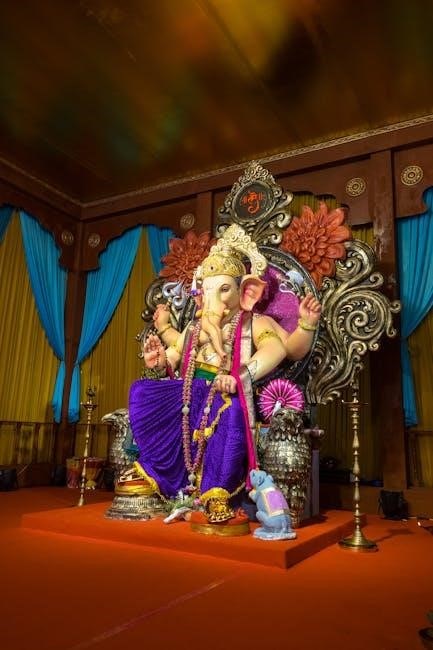
The Ganapati Upanishad, a relatively minor yet significant text within the corpus of Hindu scriptures, specifically focuses on the worship of Lord Ganesha․ It’s categorized as a Shaiva Upanishad, despite its central theme revolving around the elephant-headed deity, often considered the remover of obstacles and the god of beginnings․
This Upanishad delves into the philosophical underpinnings of Ganesha’s form and function, presenting him not merely as a deity for worldly success, but as a profound representation of Brahman – the ultimate reality․ Its importance is amplified when considering its accessibility in various languages, including Telugu, often found in PDF format for wider dissemination․
The availability of Ganapati Upanishad texts in Telugu caters to a significant demographic, allowing devotees and scholars in Andhra Pradesh and Telangana to engage with the scripture in their native tongue․ These PDF versions, often authored anonymously, provide a convenient means of study and contemplation, bridging ancient wisdom with modern accessibility․ Understanding the context of these Telugu translations is crucial for appreciating the nuances of the text․
Historical Background and Authorship
Pinpointing the precise historical origins and authorship of the Ganapati Upanishad remains a challenge for scholars; It’s generally believed to have been composed sometime between the 11th and 14th centuries CE, a period marked by the flourishing of Tantric traditions and the increasing prominence of Ganesha worship; Unlike many principal Upanishads, it lacks a clearly attributed author․
The text’s anonymous nature extends to many of its Telugu translations available as PDF documents online․ While the original Sanskrit text’s authorship is obscure, the Telugu versions often lack any identifying information regarding their translators․ This doesn’t diminish their value, but highlights the devotional and accessible nature of their creation and distribution․
The proliferation of PDF versions suggests a strong desire for wider access to the Upanishad’s teachings within the Telugu-speaking community․ The lack of formal attribution may also reflect a tradition of selfless service, where the focus is on disseminating knowledge rather than claiming individual authorship․ Further research is needed to trace the lineage of these Telugu translations․
The Significance of Ganesha in Upanishadic Literature
Traditionally, Ganesha’s prominence within the core Upanishads is limited․ However, the emergence of dedicated Upanishads like the Ganapati Upanishad signifies a later integration of this beloved deity into the broader Upanishadic framework․ This reflects the evolving religious landscape of India, where Ganesha’s popularity surged, necessitating his inclusion within established philosophical traditions․
The Ganapati Upanishad, and its subsequent Telugu translations available as PDFs, attempts to elevate Ganesha to the status of Brahman – the ultimate reality․ This is a significant departure from earlier Upanishadic thought, which typically focused on other deities or abstract principles․ The Telugu PDF versions make this complex philosophical shift accessible to a wider audience․
The availability of these translations demonstrates a desire to reconcile popular devotion with profound philosophical concepts․ By presenting Ganesha as Brahman, the Upanishad aims to provide a relatable and accessible path to spiritual realization, readily shared through digital PDF formats within the Telugu community․
The Textual Basis: Source and Variations
The Ganapati Upanishad is a relatively minor Upanishad, belonging to the Krishna Yajurveda․ Its origins are debated, with no definitive author identified – often listed as “Anonymous” in available PDF resources․ This anonymity contributes to textual variations across different manuscripts and, consequently, translations․
Several recensions exist, impacting the specific mantras, verses, and interpretations presented․ Telugu translations available as PDFs may stem from different source texts, leading to discrepancies in content and emphasis․ Careful examination of the publisher and translator is crucial when assessing the authenticity and accuracy of a given PDF version․
The digital proliferation of PDF copies, while increasing accessibility, also introduces the risk of inaccurate or incomplete texts․ Comparing multiple Telugu PDF translations can reveal these variations and aid in a more comprehensive understanding of the Upanishad’s core teachings․
Availability of Telugu Translations & PDFs
Numerous Telugu translations of the Ganapati Upanishad are available in PDF format, reflecting the text’s importance within Telugu-speaking communities․ A quick search reveals several anonymous contributions offering full PDF versions and eBooks․ These digital resources cater to a growing demand for accessible scriptural texts․
Online platforms host a variety of these PDFs, ranging from scanned images of printed books to digitally typeset versions․ The quality varies significantly; some offer clear, readable text, while others suffer from poor scanning or formatting․ Identifying reputable publishers and translators is key to obtaining accurate translations․
As of today, 04/30/2026, finding reliable Telugu PDFs requires diligent searching and verification․ Several websites specialize in religious texts, and dedicated forums often share links to downloadable PDFs of the Ganapati Upanishad․
Authenticity and Different Recensions
Determining the authenticity of Telugu PDF versions of the Ganapati Upanishad is crucial, given the existence of varied recensions․ While many PDFs circulate online, attributed to anonymous sources, establishing their lineage and accuracy presents a challenge․ Different schools of thought may favor specific recensions, influencing the Telugu translations available․
The core text remains consistent, but subtle variations in mantras and interpretations can occur across different versions․ Telugu translations may reflect these nuances, potentially leading to discrepancies between PDFs sourced from different origins․ Careful comparison with established Sanskrit texts is recommended․
Currently, identifying definitively authoritative Telugu PDFs requires cross-referencing with scholarly editions and consulting with experts in Upanishadic literature․ The anonymous nature of many online resources necessitates cautious evaluation of their content and reliability․
Core Philosophical Concepts
The Ganapati Upanishad, even within Telugu PDF interpretations, centers on the concept of Ganapati as the supreme Brahman – the ultimate reality․ This challenges conventional Vedic hierarchies, elevating Ganapati to a position of paramount importance․ Telugu translations of the PDF texts emphasize this non-dualistic perspective, portraying Ganapati as the creator, preserver, and destroyer of the universe․
Key concepts explored include the 32 Vidyaas, or forms of knowledge, representing different aspects of Ganapati’s power and manifestation․ These are often detailed within the Telugu PDFs, offering a pathway to spiritual realization․ The Upanishad also delves into the significance of mantras and yantras, tools for connecting with the divine․
Understanding these philosophical underpinnings, as presented in the Telugu PDF versions, is vital for grasping the Upanishad’s profound message and its relevance to spiritual practice․
Ganapati as Brahman: The Ultimate Reality
The Ganapati Upanishad, as explored through Telugu PDF resources, radically posits Ganapati – often perceived as an obstacle remover – as the absolute Brahman․ This challenges traditional Vedic thought, establishing Ganapati as the foundational principle of existence․ Telugu translations within these PDFs meticulously detail this concept, emphasizing Ganapati’s all-pervading nature․
The Upanishad asserts that all deities and cosmic forces emanate from Ganapati, making him the source of creation, preservation, and dissolution; Studying the Telugu PDF versions reveals how this understanding shifts the focus from external worship to internal realization of the divine within․
This perspective, readily available in accessible PDF formats, encourages devotees to see Ganapati not merely as a deity, but as the very essence of reality, a profound philosophical shift detailed in the texts․
The 32 Vidyaas (Forms of Knowledge) Explained

A core tenet of the Ganapati Upanishad, thoroughly elucidated in Telugu PDF versions, is the exposition of the 32 Vidyaas – distinct forms of sacred knowledge․ These aren’t simply academic disciplines, but pathways to realizing Brahman through Ganapati’s grace․ Telugu translations within these PDFs break down each Vidyaa, detailing its specific mantra, ritual, and philosophical significance․
The PDF resources highlight that these 32 forms encompass diverse areas like astrology, grammar, music, and various branches of Vedic learning․ Mastering these Vidyaas, as described in the Telugu texts, isn’t about intellectual accumulation, but about purifying the mind and cultivating devotion․
Accessing these Telugu PDFs provides a unique opportunity to understand how ancient wisdom is structured and how each knowledge system contributes to the ultimate goal of self-realization through Ganapati․
The Role of Mantras and Yantras
The Ganapati Upanishad, as detailed in available Telugu PDF resources, places immense importance on mantras and yantras as potent tools for spiritual advancement․ These aren’t merely symbolic representations, but dynamic energies capable of invoking Ganapati’s blessings․ Telugu translations within these PDFs meticulously explain the correct pronunciation and application of key mantras;
The PDF versions emphasize that specific yantras – geometric diagrams – act as focal points for meditation and ritual practice, amplifying the power of the mantras․ They provide visual representations of Ganapati’s energy, aiding concentration and devotion․
Studying these Telugu PDFs reveals that the combination of mantra recitation and yantra worship is considered a highly effective method for overcoming obstacles and achieving desired outcomes, aligning with the core purpose of Ganapati devotion․
The Ganapati Atharvashirsha – Connection and Importance

The Ganapati Atharvashirsha holds a significant connection to the Ganapati Upanishad, frequently appearing alongside it in Telugu PDF compilations․ These PDF resources highlight the Atharvashirsha as a foundational text for Ganapati worship, often considered a preamble to the deeper philosophical insights of the Upanishad․
Telugu translations within these PDFs demonstrate that the Atharvashirsha provides a powerful invocation and description of Ganapati, establishing his attributes and powers․ It’s viewed as a preparatory practice, purifying the mind and creating a receptive state for Upanishadic study․
Many Telugu PDF versions present both texts together, emphasizing their complementary nature․ The Atharvashirsha offers a devotional approach, while the Upanishad delves into the philosophical underpinnings of Ganapati’s divinity, creating a holistic understanding․
Relationship to Other Ganesha Upanishads
Exploring Telugu PDF resources reveals the Ganapati Upanishad exists within a family of Ganesha-focused Upanishads․ While the Ganapati Upanishad is prominent, several other related texts are often found within the same digital collections, though less frequently translated into Telugu․
These PDF compilations sometimes include the Mahaganapati Upanishad and the Shiva-Ganapati Upanishad, offering comparative study opportunities․ However, Telugu translations are often limited, with the Ganapati Upanishad receiving the most attention․

Analysis of these PDFs suggests the Ganapati Upanishad is considered foundational, providing core philosophical tenets․ Other Upanishads expand upon these ideas, offering diverse perspectives on Ganapati’s nature and worship․ Finding comprehensive Telugu PDFs containing multiple translations remains a challenge, highlighting the Ganapati Upanishad’s unique position․
Rituals and Practices Associated with the Upanishad

Telugu PDF versions of the Ganapati Upanishad often detail specific rituals and practices linked to its teachings․ These commonly include Ganapati Homa (fire sacrifice) procedures, described with mantra recitation guidelines, often presented alongside Yantra diagrams within the PDFs․
Practices like Ganapati Puja, incorporating the 32 Vidyas mentioned in the text, are explained, sometimes with variations reflecting regional Telugu traditions․ The PDFs emphasize the importance of proper pronunciation and understanding of mantras for effective ritual performance․
Furthermore, some Telugu PDFs outline preparatory practices like purification rites and the establishment of a sacred space․ They also detail the significance of offerings and the intended benefits of consistent practice, aiming to invoke Ganapati’s blessings․ These resources serve as guides for devotees seeking to integrate the Upanishad’s wisdom into their daily spiritual lives․
Understanding the Telugu PDF Versions
Telugu PDF versions of the Ganapati Upanishad vary in quality and completeness; Many are scans of older texts, potentially containing transcription errors․ Anonymous sources frequently contribute to the availability of these digital copies, making verification crucial․
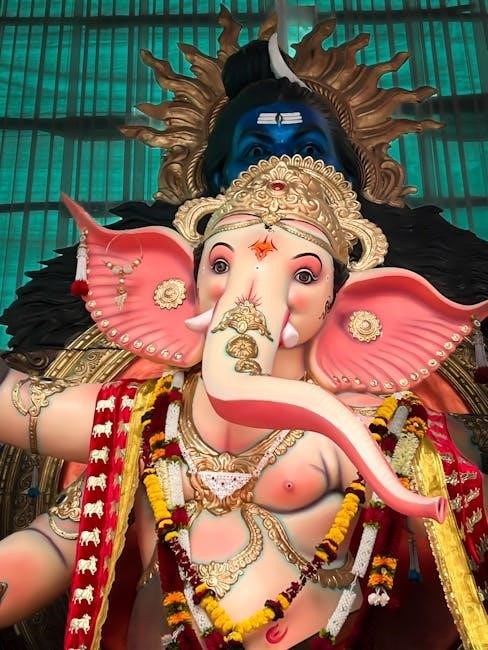
These PDFs typically present the original Sanskrit text alongside a Telugu translation, often with transliteration․ Some include commentaries from Telugu scholars, offering interpretations of the Upanishad’s philosophical concepts․ The formatting can range from simple text layouts to more elaborate designs with illustrations․
Users should be aware that different recensions of the Upanishad exist, and the Telugu PDF may reflect a specific lineage․ Examining the publisher or source information within the PDF can help determine its authenticity and textual basis․ Careful comparison with established Sanskrit sources is recommended for serious study․
Popular Telugu Translations and Publishers
Identifying prominent Telugu translations of the Ganapati Upanishad proves challenging due to the prevalence of anonymously published PDF versions․ However, several traditional publishers specializing in Vedic literature often carry related texts․ These include institutions focused on Hindu scriptures and philosophical works within Andhra Pradesh and Telangana․
While specific named translators are often absent from freely available PDFs, certain editions demonstrate a higher degree of scholarly rigor, suggesting experienced translators were involved․ Look for versions with detailed commentaries and accurate transliteration․ Some digital repositories may attribute translations to known scholars, though verification is essential․
Exploring publications from organizations dedicated to preserving Telugu religious texts can yield reliable translations․ These publishers prioritize accuracy and often include critical apparatus, enhancing the study experience․ Remember to cross-reference with Sanskrit originals when possible․
Where to Find Reliable Telugu PDFs Online (as of 04/30/2026)
As of today, April 30th, 2026, locating dependable Telugu PDFs of the Ganapati Upanishad requires careful navigation․ Several online archives and digital libraries host scanned copies, often anonymously uploaded․ Websites specializing in Hindu scriptures, like those dedicated to Upanishads and related texts, are good starting points․
PDF search engines can pinpoint files, but verifying authenticity is crucial․ Look for sources with established reputations for accurate transcriptions․ Beware of sites with excessive advertising or unclear origins․ Digital libraries associated with universities or religious institutions in India may offer reliable versions․
Remember that many freely available PDFs lack proper attribution․ Exercise caution and compare multiple sources when possible․ Checking for consistent transliteration and commentary quality can indicate a more trustworthy edition․
Legality and Copyright Considerations
Regarding Telugu PDF versions of the Ganapati Upanishad, copyright status is complex․ Many ancient texts, including Upanishads, are considered to be in the public domain due to their age․ However, specific Telugu translations and commentaries may be protected by copyright․

Downloading and distributing copyrighted material without permission is illegal․ While finding freely available PDFs is common, it doesn’t automatically imply legality․ Publishers and translators hold rights to their specific interpretations and presentations of the text․
It’s advisable to seek out editions explicitly released under open licenses or purchased legally․ Supporting the creators of Telugu translations ensures continued access to accurate and well-researched resources․ Respecting intellectual property rights is crucial, even with ancient texts․
Practical Applications and Benefits of Study
Studying the Ganapati Upanishad, even through Telugu PDF versions, offers numerous benefits․ The text’s focus on Ganesha as Brahman provides a unique pathway to understanding ultimate reality․ Devotees may experience enhanced clarity, wisdom, and spiritual growth․
The 32 Vidyaas detailed within the Upanishad represent diverse forms of knowledge, applicable to daily life․ Understanding these can foster holistic development and a broader perspective․ Utilizing Telugu translations makes the complex concepts more accessible to a wider audience․
Furthermore, the Upanishad’s emphasis on mantras and yantras provides practical tools for meditation and ritual practice․ Consistent study and application can lead to increased focus, inner peace, and a deeper connection to the divine․ Accessing a Telugu PDF facilitates regular engagement with these powerful teachings․
Meditation Techniques Based on the Upanishad
The Ganapati Upanishad, readily available in Telugu PDF format, inspires several potent meditation techniques․ Focusing on Ganesha as the embodiment of wisdom and remover of obstacles is central․ Visualizing Ganesha’s form, as described in the text, during meditation cultivates inner peace․
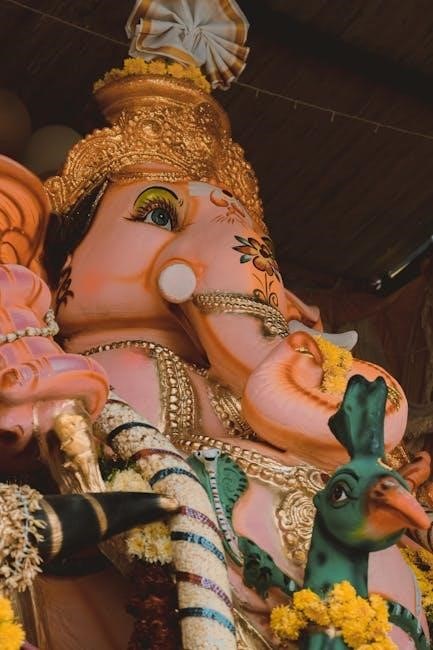
Chanting the Ganapati Atharvashirsha, often included with Upanishad texts, is a powerful practice․ Utilizing a Telugu transliteration from a PDF version aids pronunciation and understanding․ Meditating on the 32 Vidyaas – forms of knowledge – expands consciousness․
Yantra meditation, guided by diagrams found within the Upanishad (and often included in PDFs), focuses energy and promotes mental clarity․ Consistent practice, aided by accessible Telugu resources, unlocks deeper spiritual insights and fosters a stronger connection to the divine within․
Impact on Telugu Religious Practices
The accessibility of the Ganapati Upanishad in Telugu PDF format has significantly impacted religious practices within the region․ It’s fostered a deeper understanding of Ganesha’s philosophical importance beyond traditional iconography․
Increased availability, through online PDFs and translated texts, has led to wider incorporation of Ganapati Atharvashirsha chanting into daily puja (worship) routines․ The Upanishad’s emphasis on knowledge (Vidyaas) has encouraged scholarly study amongst Telugu-speaking priests and devotees․
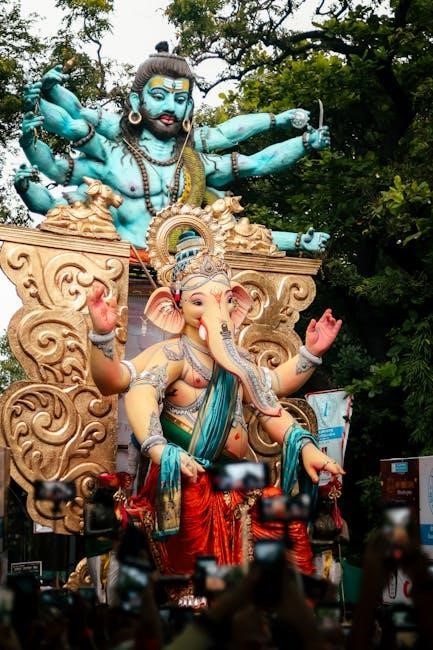
Furthermore, the text’s influence extends to festivals, with more elaborate Ganesha processions and rituals informed by Upanishadic principles․ The PDF versions facilitate home study and personal devotion, strengthening the connection between individuals and this important deity within the Telugu religious landscape․
The Enduring Relevance of the Ganapati Upanishad
The Ganapati Upanishad, particularly through readily available Telugu PDF translations, continues to hold profound relevance for devotees and scholars alike․ Its philosophical depth, outlining Ganesha as Brahman, resonates deeply within the Telugu spiritual tradition․
The ease of access to PDF versions ensures the Upanishad’s teachings are not confined to academic circles, but are embraced by a wider audience․ This accessibility fosters a renewed interest in the 32 Vidyaas and the power of mantras and yantras․
As long as Telugu PDFs remain available, the Upanishad will serve as a vital link to understanding Ganesha’s multifaceted nature, enriching religious practices and inspiring continued exploration of its timeless wisdom․ Its enduring legacy is assured through digital preservation and dissemination․